Experienced physical therapist with over 14 years serving patients in Baltimore.
If you had surgery and your range of motion still hasn’t come back, if a car accident left you with stiffness and pain that medications barely touch, or if you’ve been living with a bad back for so long you’ve forgotten what normal feels like, physical therapy may be right for you.
Mid-Atlantic Spinal Rehab & Chiropractic has delivered physical therapy and spinal rehabilitation in Baltimore since 2012. Dr. Marc Gulitz, our founder, is a licensed Doctor of Chiropractic with physical therapy privileges who has spent over 14 years treating patients with acute and chronic musculoskeletal injuries. He built this practice on the idea that physical therapy and chiropractic care produce better results when they are coordinated under one roof. If you need Baltimore, MD physical therapy, schedule an evaluation and let us put together a plan built around your actual diagnosis.
Physical Therapy Baltimore, MD
A physical therapist measures deficits in degrees, grades strength on standardized scales, and documents functional limitations against the demands of your daily life. Every exercise in your program exists because there is a clinical reason for it. A weak gluteus medius gets a specific activation drill. A stiff thoracolumbar junction gets targeted mobilization. A patient favoring one leg after a collision gets gait retraining. At our Baltimore offices, physical therapy programs are prescribed, supervised, progressed, and measured. Patients recovering from auto accidents, surgeries, workplace injuries, and chronic conditions each receive a plan designed for their specific presentation.
Physical Therapy Services We Offer in Baltimore
Our Baltimore locations offer a full scope of physical therapy and rehabilitative services. What a patient needs during the first week of recovery looks nothing like what they need at week eight. We build programs that evolve alongside the patient. Here is what’s available:
- Manual physical therapy. Joint mobilization, soft tissue release, and hands-on stretching techniques restore movement and reduce pain. Manual therapy is especially effective for patients with cervical or lumbar restrictions following trauma.
- Chiropractic care. Spinal adjustments paired with physical therapy address both the joint mechanics and the muscular deficits that surround an injury. Coordinating these disciplines under one plan eliminates the communication gaps that slow recovery.
- Corrective exercise programs. Strengthening and stabilization exercises target documented weaknesses and imbalances. Programs are reassessed at regular intervals and adjusted as capacity improves.
- Therapeutic modalities. Electrical muscle stimulation, ultrasound, and other modalities manage pain and inflammation during acute phases. These are always combined with active rehabilitation, not used as standalone treatments.
- Whiplash treatment. Cervical injuries from rear-end and side-impact collisions require phased rehabilitation. We progress patients from gentle range-of-motion work through active strengthening, monitoring for symptom flare at every step.
- Car accident treatment. Collision injuries often involve multiple body regions simultaneously. We evaluate the cervical, thoracic, and lumbar spine together and build treatment plans that address all involved structures.
- Back pain treatment. Lumbar disc injuries, sacroiliac dysfunction, and chronic low back conditions respond to physical therapy programs that rebuild core stability and address the specific segments involved.
- Neck pain treatment. Cervical pain from trauma, degenerative changes, or postural strain is treated with a combination of manual therapy, progressive exercise, and neuromuscular re-education.
- Postural assessment and correction. Structural screenings identify alignment issues and compensatory patterns that contribute to recurring pain. Findings inform both the exercise prescription and the ergonomic recommendations we provide.
Why Choose Mid-Atlantic Spinal Rehab & Chiropractic for Physical Therapy in Baltimore, MD?
Baltimore Is Where We Started
Dr. Gulitz opened the first Mid-Atlantic Spinal Rehab & Chiropractic clinic in Baltimore in 2012. Before that, he spent three years treating nearly 1,000 patients at a multidisciplinary facility in Las Vegas. He worked daily alongside physicians, physical therapists, neurologists, and orthopedic surgeons, and he saw firsthand what happens when providers coordinate versus when they don’t. Patients who received integrated care recovered faster and more completely. That observation became the operating principle for this practice.
Today, the practice has grown to multiple locations across Maryland. But Baltimore remains the center. Hundreds of patients have completed physical therapy and rehabilitation programs here for injuries ranging from whiplash and disc herniations to workplace strains and post-surgical recovery.
Evidence-Based and Clinically Accountable
Dr. Marc Gulitz earned his B.S. in Molecular Biology from Lehigh University and his Doctor of Chiropractic degree from New York Chiropractic College. He serves on the board of the Maryland Chiropractic Association and has spoken at panels for the Maryland Association for Justice on personal injury rehabilitation protocols. His license is verifiable through the Maryland Board of Chiropractic Examiners.
Research published by the NIH’s National Center for Complementary and Integrative Health supports the combination of manual therapies and active exercise for treating back and neck pain. The National Institutes of Health has published systematic reviews confirming that multimodal conservative care produces better outcomes for musculoskeletal conditions than any single intervention used alone. Our clinical model reflects that research.
Understanding Physical Therapy Care
Conditions We Treat and Treatment Options
Physical therapy at our Baltimore offices addresses a wide range of injuries and chronic conditions. The most common reasons patients begin a program include:
- Neck and back pain following auto accidents
- Cervicogenic headaches and tension-type headaches
- Post-surgical rehabilitation for spinal and joint procedures
- Herniated or bulging discs with or without radiculopathy
- Workplace injuries affecting the spine, shoulders, and extremities
- Shoulder injuries from seatbelt loading or bracing during a collision
- Chronic pain conditions that have plateaued with medication management
Treatment combines active and passive interventions. Active components include therapeutic exercise, functional training, and neuromuscular re-education. Passive components include manual therapy, traction, and modalities. The ratio shifts as the patient progresses. Early treatment tends to be more passive while pain and inflammation are high. As those settle, the balance tips toward active exercise and functional restoration.
What to Expect from Physical Therapy
Your first appointment is an evaluation. We don’t prescribe exercises before understanding the diagnosis. The initial session covers:
- A detailed interview about your injury, symptoms, medical history, and functional goals
- Range-of-motion and manual muscle testing
- Orthopedic and neurological screening
- Functional movement assessment
- A discussion of findings and an outline of the proposed treatment plan
Follow-up sessions are hands-on. Each visit typically runs 30 to 45 minutes and includes a combination of manual treatment, guided exercise, and modalities when needed. We reassess at defined intervals and modify the plan based on measurable progress.
Typical Treatment Timeline
How long physical therapy takes depends on what we are treating and how the patient responds.
- Weeks 1 to 2: Initial phase. Pain and inflammation are the primary focus. Gentle mobilization. Education on activity modification and positions to avoid.
- Weeks 3 to 6: Active rehabilitation. Strengthening exercises are introduced and progressed. Manual therapy continues. Most patients notice functional gains during this phase.
- Weeks 6 to 12: Functional restoration. The emphasis shifts to endurance, stability, and return to normal activity. Visit frequency decreases.
- Beyond 12 weeks: Complex or chronic cases may require a longer course of care. We discuss this transparently and only continue treatment when documented progress supports it.
These are general ranges. Individual results depend on injury severity, patient compliance, overall health, and the presence of complicating factors like pre-existing conditions.
What to Bring to Your First Visit
- Insurance card and photo identification
- Comfortable clothing that allows full range of movement
- Physician referral or surgical reports, if applicable
- Prior imaging results from other providers, emergency departments, or urgent care
- Auto insurance PIP information for accident-related injuries
- A current list of medications and supplements
Allow approximately one hour for the first visit. Follow-up sessions are shorter. We build the schedule so that patients receive full attention at every appointment.
Maryland Physical Therapy and Rehabilitation Resources
The following resources provide credential verification and evidence-based information relevant to physical therapy patients in Maryland:
- The Maryland Board of Chiropractic Examiners maintains license records and public disciplinary information for chiropractors with physical therapy privileges in the state.
- The NCCIH chiropractic and manual therapy overview from the National Institutes of Health summarizes the research on spinal manipulation, exercise therapy, and conservative treatment approaches.
- NHTSA crash statistics provide publicly available data on motor vehicle collisions and injuries relevant to patients seeking rehabilitation after an accident.
These resources are informational and do not substitute for care from a licensed provider.
Contact Mid-Atlantic Spinal Rehab & Chiropractic
Pain that hasn’t responded to rest, medication, or time is not going to fix itself. Whether yours came from a wreck on I-83, a fall at work, a surgery that didn’t fully resolve the problem, or years of accumulated wear, our Baltimore physical therapy team can help. We treat the diagnosis, not just the symptom.
We accept most major insurance plans and coordinate with auto insurance PIP benefits for patients injured in motor vehicle collisions. Contact us to schedule your initial evaluation.
Physical Therapy Statistics in Baltimore
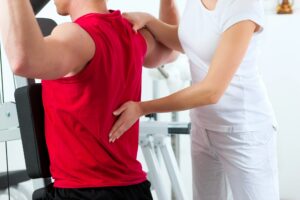 Physical therapy helps people recover from the injuries that everyday life and work tend to cause, and the need is widespread. A skilled Baltimore, MD physical therapy provider often sees patients after a fall, since CDC falls data shows that falls are the leading cause of injury for adults age 65 and older, with about 1 in 4 falling each year.
BLS data reports that sprains, strains, and tears are among the soft tissue injuries that most often keep people off the job, with the back the body part most commonly involved. Most of these injuries do not require surgery, but they do need guided recovery to heal fully. Rehabilitation gives those injuries a structured path back to strength and motion, and that is exactly what physical therapy in Baltimore sets out to provide for residents across the city.
Conditions Physical Therapy Can Help Treat
Despite common misconceptions, physical therapy treats far more than sports injuries. It restores movement and eases pain across a wide range of conditions, often helping people avoid surgery altogether or recover effectively after necessary procedures. The following are some of the most common reasons Baltimore patients come to us for physical therapy.
- Recovery after surgery. Rebuilding strength and motion after an operation is one of the most important parts of healing. Structured rehabilitation after surgery guides the joint or muscle back to function and lowers the risk of a setback. We progress the work at a pace your body can handle.
- Back and neck pain. Much of the back pain and neck pain we treat comes from weak or imbalanced muscles that no longer support the spine well. Physical therapy strengthens those muscles and retrains movement, so the relief holds rather than fading after a few days.
- Sciatica and nerve symptoms. When a nerve is irritated, the pain can travel down a limb. Sciatica often responds to therapy that eases pressure on the nerve and corrects the movement patterns that aggravate it.
- Sports and overuse injuries. Strains, sprains, and tendon problems arise in active people of every age. We treat the injury and address the habit or weakness behind it, so you return to your sport on stronger footing.
- Work-related injuries. Lifting, repetitive motion, and long hours wear on the body. Physical therapy treats the resulting strains and rebuilds the capacity you need to return to the job safely.
- Balance problems and fall prevention. Poor balance raises the risk of a fall, especially with age. Targeted strength and balance training is one of the most effective ways to lower that risk and keep people steady and independent.
- Dizziness and vertigo. Certain kinds of vertigo stem from the inner ear and respond well to specific therapy techniques. We assess the cause and use proven maneuvers and exercises to settle the symptoms.
- Auto accident and whiplash injuries. A crash can leave the neck, back, and soft tissue hurting for weeks. Therapy helps restore motion and strength while the tissue heals, and our team documents your progress along the way.
Baltimore Physical Therapy FAQs
Do I need a referral for physical therapy in Maryland?
Maryland allows direct access to physical therapy, so you can often begin an evaluation without a referral. Some insurance plans still require one for coverage, so it is worth checking your policy first. If you are unsure, call our Baltimore office and we will help you find out what your plan needs before you come in.
What happens at my first physical therapy session?
Your first visit begins with a conversation about your symptoms, history, and goals, followed by an evaluation of how you move. We explain what we find and build a plan with you. Many patients start treatment the same day. Plan for this session to run a little longer than the visits that follow it.
How long does physical therapy take?
It depends on the injury and your goals. A simple strain may need only a few weeks, while recovery from surgery or a serious injury takes longer. We give you a realistic timeline after the evaluation and adjust it as you progress. Consistent work between sessions tends to shorten the overall course of care.
Does physical therapy hurt?
Therapy should challenge you without causing sharp pain. Some exercises produce mild soreness, much like a good workout, and that usually eases within a day. We work within your tolerance and adjust the plan if something does not feel right. Tell your therapist what you are feeling so we can keep the work productive and safe.
Can physical therapy help me avoid surgery?
Sometimes, yes. For many back, neck, and joint problems, a course of physical therapy resolves the issue or improves it enough that surgery is no longer needed. Even when an operation is unavoidable, therapy beforehand often leads to a smoother recovery. We will be honest about what therapy can and cannot do for your case.
Will my insurance cover physical therapy?
Many plans include physical therapy benefits, though the number of visits and your share of the cost vary by policy. We accept a range of insurance and also work with auto accident claims. Our staff verifies your coverage before treatment and explains what to expect, so there are no surprises later on.
What should I wear to physical therapy?
Comfortable, loose clothing that lets you move is best. If we are treating a knee or ankle, shorts help, and for a shoulder, a tank top or loose shirt works well. Wear supportive shoes you can move in. The goal is simply to let you bend, stretch, and exercise without anything holding you back.
How is physical therapy different from chiropractic care?
The two overlap and often work well together. Chiropractic care focuses on restoring joint motion through hands-on adjustments, while physical therapy rebuilds strength, mobility, and movement patterns through guided exercise. Because we offer both under one roof, your care can draw on whichever approach, or combination of the two, fits your condition best.
Can physical therapy help after a car accident?
Often, yes. Crash injuries to the neck, back, and soft tissue respond well to therapy that restores motion and rebuilds strength as the tissue heals. Starting early tends to improve the outcome and keeps minor injuries from turning into lasting ones. We also document your progress, which can matter for an insurance claim.
Local Information for Baltimore Physical Therapy
Physical Therapy and an Active Baltimore
Baltimore keeps people moving, from harbor walks and rec leagues to physically demanding jobs across the city. That activity is good for health, but it also produces its share of strains, sprains, and overuse injuries. Physical therapy helps Baltimore residents recover from those setbacks and get back to the routines they value. Whether the problem started on a weekend run or built up over years at a desk, our focus is on returning you to full, comfortable motion.
Important Local Resources for Baltimore Physical Therapy
If an injury follows an accident or turns into an emergency, the resources below can help. We share them for convenience only.
- Sinai Hospital, (410) 601-9000. A Northwest Baltimore hospital with a 24-hour emergency department and on-site imaging, located on West Belvedere Avenue.
- University of Maryland Medical Center, (410) 328-8667. A downtown academic hospital and Level I trauma center, equipped for serious injuries.
- Baltimore Police Department, 911 for emergencies and 311 for non-emergencies. The department’s online system handles auto accident and incident reports, useful when an injury follows a crash.
Mid-Atlantic Spinal Rehab & Chiropractic shares this list as a courtesy and does not endorse, and is not affiliated with, any of these organizations.
About Mid-Atlantic Spinal Rehab & Chiropractic
Mid-Atlantic Spinal Rehab & Chiropractic has offered physical therapy and chiropractic care to the Baltimore area since 2012. Our founder, Dr. Marc Gulitz, is a Doctor of Chiropractic who built our practice around an integrated model, with physical therapy and chiropractic care working side by side. He earned his degree from Northeast College of Health Sciences and serves on the board of the Maryland Chiropractic Association. Over the years, our providers have guided thousands of patients through recovery from injury and surgery.
What Our Clients Say
★★★★★
“This is probably one of the nicest Dr’s office I’ve been to. The staff is attentive, nice and they genuinely care about your well being. The office is always clean and inviting, and they value your time, so you never have a long wait. If you’re in need of physical therapy or chiropractic care, this is the place to go.” — Monique Aiken
Read more reviews on our Google Business Profile.
Contact Mid-Atlantic Spinal Rehab & Chiropractic
An injury or a lingering problem rarely improves by waiting. Whether you are recovering from surgery, healing after a car accident, or trying to move past pain that will not quit, our physical therapy in Baltimore starts with a careful evaluation and a plan built around your goals. We accept many insurance plans and work with auto accident claims, and our staff will walk you through coverage before treatment begins. Contact us to request an appointment, and someone from our office will follow up to find a time that fits your schedule.