
Experienced physical therapist with over 14 years serving patients in Bowie.
If you’re recovering from surgery, trying to regain mobility after a car accident, or dealing with pain that flares up every time you bend, lift, or sit for too long, physical therapy may be the missing piece. Mid-Atlantic Spinal Rehab & Chiropractic has provided physical therapy and spinal rehabilitation throughout Maryland since 2012. Dr. Marc Gulitz, our founder, is a licensed Doctor of Chiropractic with physical therapy privileges who graduated from New York Chiropractic College. He built this practice around the principle that rehabilitation works best when it’s coordinated with chiropractic care under a single treatment plan. If you need Bowie, MD physical therapy, reach out to schedule an evaluation.
Physical Therapy Bowie, MD
A physical therapy program is built around a clinical diagnosis. Every exercise, every stretch, every manual technique targets a documented deficit. Range of motion measured in degrees. Strength graded on a scale. Functional limitations assessed against your daily demands. Without that precision, patients frequently do too much, too little, or the wrong things entirely. At our Bowie office, physical therapy is never generic. We evaluate, diagnose, build a plan, treat, and measure progress at every stage. Patients recovering from auto accidents, workplace injuries, sports trauma, and chronic conditions all receive programs designed specifically for their presentation.
Physical Therapy Services We Offer in Bowie
Our Bowie-area clinic offers a full range of physical therapy and rehabilitative services. The right combination depends on your injury, your goals, and where you are in the recovery process. Here is what’s available:
- Manual physical therapy. Hands-on joint mobilization and soft tissue techniques restore movement and reduce pain. Manual therapy is particularly effective for patients with restricted cervical or lumbar range of motion following trauma.
- Chiropractic treatment. Spinal adjustments paired with physical therapy produce better outcomes than either discipline alone. We coordinate both under one roof so that treatment plans stay aligned and patients aren’t managing two separate providers.
- Corrective exercise programs. Targeted strengthening and stabilization exercises address the muscle imbalances and weaknesses that caused the injury or developed because of it. Programs are progressed as patients improve and reassessed regularly.
- Therapeutic modalities. Electrical muscle stimulation, ultrasound, and other modalities control pain and inflammation during the acute phase of recovery. These are used alongside active treatment, not as a substitute for it.
- Whiplash treatment. Cervical injuries from car accidents require careful, phased rehabilitation. We progress patients from gentle mobilization through active strengthening, monitoring symptoms at every step.
- Back pain treatment. Lumbar disc injuries, muscle strains, and chronic low back conditions respond to structured physical therapy that builds core stability and addresses the specific spinal segments involved.
- Sciatica relief. Nerve compression in the lumbar spine causing radiating leg pain is treated through a combination of manual therapy, directional preference exercises, and progressive loading.
- Postural correction. Structural and postural assessments identify alignment issues that contribute to recurring pain. We use these findings to shape exercise prescriptions and ergonomic recommendations.
Why Choose Mid-Atlantic Spinal Rehab & Chiropractic for Physical Therapy in Bowie, MD?
Rehabilitation Is What We Do
At Mid-Atlantic Spinal Rehab & Chiropractic, rehabilitation is central to our practice. Dr. Gulitz designed the practice around integrated care after spending three years in a multidisciplinary clinic in Las Vegas. There, he worked with physicians, neurologists, orthopedists, and physical therapists to treat nearly 1,000 patients recovering from serious injuries. When he opened his own practice in Baltimore in 2012, he carried that model forward.
The result is a clinic where chiropractic adjustments, physical therapy, and corrective exercise aren’t separate departments with separate goals. They’re components of one coordinated plan. A patient recovering from a rear-end collision might receive spinal manipulation to restore joint mechanics, manual therapy to address soft tissue damage, and a progressive exercise program to rebuild stability. All three happen in the same office, managed by the same clinical team, documented in the same chart.
Proven Results With Injury Recovery
Mid-Atlantic Spinal Rehab & Chiropractic has expanded to multiple locations across Maryland since 2012. That growth was driven by clinical results. Hundreds of patients have completed rehabilitation programs at our facilities for injuries including whiplash, disc herniations, workplace strains, and post-surgical recovery.
Dr. Marc Gulitz holds a B.S. in Molecular Biology from Lehigh University and a Doctor of Chiropractic degree from New York Chiropractic College. He serves on the board of the Maryland Chiropractic Association and is licensed to practice chiropractic care and physical medicine rehabilitation in the state. Credentials are verifiable through the Maryland Board of Chiropractic Examiners.
Bowie Physical Therapy Infographic
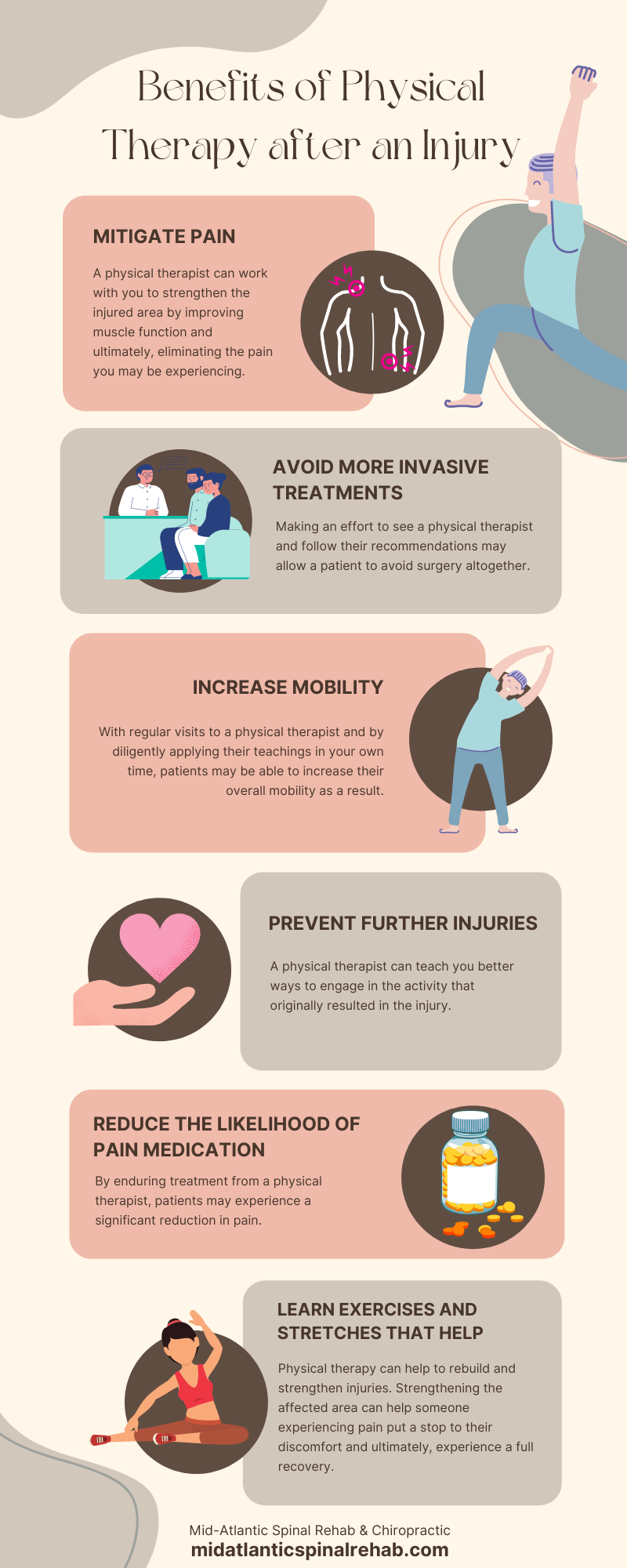
Understanding Physical Therapy Care
Conditions We Treat and Treatment Options
Physical therapy addresses a wide spectrum of musculoskeletal and neurological conditions. At our Bowie clinic, the most frequent reasons patients begin a physical therapy program include:
- Neck and back pain following auto accidents
- Cervicogenic headaches and chronic migraines
- Post-surgical rehabilitation for spinal and orthopedic procedures
- Herniated or bulging discs with or without radiculopathy
- Workplace injuries involving the spine, shoulders, or extremities
- Sports injuries affecting joints, ligaments, and muscles
- Chronic pain conditions that have not responded to medication
Treatment plans combine active and passive interventions. Active components include therapeutic exercise, functional training, and neuromuscular re-education. Passive components include manual therapy, modalities, and traction. The NIH’s National Center for Complementary and Integrative Health notes that combining manual therapies with active exercise produces better outcomes for back and neck pain than either approach used in isolation. That finding mirrors what we observe in our clinic every day.
What to Expect from Physical Therapy
Your first appointment is an evaluation. We don’t start exercises on day one without knowing what we’re treating. The initial session includes:
- A thorough interview about your injury, symptoms, and functional limitations
- Range-of-motion and strength testing
- Orthopedic and neurological screening
- Functional movement assessment
- Discussion of findings and an outline of the proposed treatment plan
Subsequent visits are hands-on. Each session typically lasts 30 to 45 minutes and includes a combination of manual treatment, guided exercise, and modalities as needed. We reassess progress at regular intervals and adjust the plan when something isn’t working or when the patient is ready to advance.
Typical Treatment Timeline
Recovery depends on what we’re treating, how severe it is, and how consistently the patient follows through with home exercise and activity modifications.
- Weeks 1 to 2: Initial phase. Focus on pain reduction and inflammation control. Gentle range-of-motion work. Education on positions and activities to avoid.
- Weeks 3 to 6: Active rehabilitation. Strengthening exercises are introduced. Manual therapy continues. Most patients notice functional improvement during this phase.
- Weeks 6 to 12: Progressive loading and functional restoration. The emphasis shifts to building endurance, stability, and confidence with daily activities.
- Beyond 12 weeks: Patients with complex or chronic conditions may continue with a maintenance program. We discuss this openly and only recommend ongoing care when the clinical picture supports it.
Individual results vary. We set realistic expectations during the evaluation and revisit them throughout the course of treatment.
What to Bring to Your First Visit
- Insurance card and photo identification
- Comfortable clothing that allows you to move freely
- Surgical reports or physician referral, if applicable
- Any imaging results from other providers (X-rays, MRI, CT)
- Auto insurance PIP information if the injury is accident-related
- A list of current medications
Allow approximately one hour for your first visit. Follow-up sessions are shorter. We build enough time into the schedule so that you get full attention during every appointment.
Maryland Physical Therapy and Rehabilitation Resources
These resources provide additional information on credentials, evidence-based rehabilitation, and patient rights in Maryland:
- The Maryland Board of Chiropractic Examiners maintains license verification and public disciplinary records for chiropractic providers with physical therapy privileges in the state.
- The NCCIH chiropractic overview from the National Institutes of Health summarizes the research on spinal manipulation, exercise therapy, and related conservative treatments.
- NHTSA’s data portal provides publicly accessible crash and injury statistics for patients seeking documentation or context for accident-related rehabilitation claims.
These resources are informational and do not replace individualized care from a licensed provider.
Contact Mid-Atlantic Spinal Rehab & Chiropractic
Pain that lingers after an accident, surgery, or injury doesn’t have to become permanent. And chronic conditions that have been managed with medication alone may respond to a structured rehabilitation program that addresses the root cause. Our Bowie physical therapy team treats patients across a wide range of conditions, from acute collision injuries to long-standing spinal problems.
We accept most major insurance plans and coordinate with auto insurance PIP benefits for patients injured in motor vehicle accidents. Contact us to schedule your initial evaluation and take the first step toward getting back to the activities that matter to you.
Physical Therapy Statistics in Bowie, MD
 About 1 in 5 U.S. adults, more than 53 million people, live with diagnosed arthritis, and physical activity guided by a therapist is one of the most effective, drug-free ways to manage it, according to CDC arthritis data. Falls are another concern the field addresses.
CDC falls data reports that one in four older adults falls each year, and targeted strength and balance training lowers that risk. Work takes a toll too. BLS data shows that sprains, strains, and tears rank among the leading causes of days away from work, most often affecting the back. For many people, physical therapy is what turns a limiting condition into a manageable one.
What Should You Expect During Physical Therapy?
Physical therapy is a hands-on, active process, and knowing the stages ahead of time makes the first appointment far less daunting. Here is what to expect from physical therapy in Bowie.
- A thorough evaluation. Your therapist begins by reviewing your health history and asking what brought you in. Then they examine how you move, measuring strength, flexibility, and range of motion to trace the problem to its source rather than treating the symptom alone.
- A clear explanation and goals. Once the evaluation is done, your therapist explains what is happening in plain language and sets realistic goals with you. Whether the aim is walking without pain, returning to a sport, or recovering after surgery, those goals shape everything that follows.
- A custom treatment plan. No two bodies respond the same way, so your plan is built around your condition, your goals, and your daily life. It changes as you progress rather than following a fixed template.
- Hands-on treatment. Many sessions include manual therapy, soft tissue work, and joint mobilization to ease pain and restore movement. This is often where patients with stubborn back pain or lingering neck pain feel the first real relief.
- Therapeutic exercise. Guided, progressive exercise is the heart of physical therapy. Your therapist teaches the movements that rebuild strength and stability, correcting your form so each one does its job safely.
- Education and a home program. Recovery does not stop when you leave the clinic. You go home with exercises to practice and guidance on posture, movement, and activity, so your progress continues between visits.
- Progress tracking and adjustment. Your therapist reassesses along the way, measuring how far you have come and adjusting the plan when your body is ready for more. Steady, measurable progress is the goal.
- Recovery and prevention. As you reach your goals, the focus shifts to keeping the problem from returning. You finish with the strength, mobility, and knowledge to stay well. Whether you came in after surgery or to manage dizziness from vertigo, the process adapts to meet your needs.
Bowie Physical Therapy FAQs
What conditions does physical therapy treat?
Physical therapy treats a wide range of problems, from back and neck pain to joint injuries, arthritis, and recovery after surgery. It also helps with balance and dizziness, sports injuries, and the lingering effects of a car accident. If a condition affects how you move or causes pain with movement, physical therapy can usually help. Your therapist tailors the approach to the specific issue you bring in.
Do I need a referral for physical therapy in Maryland?
In Maryland, you can begin physical therapy without a referral in most cases, thanks to direct access rules. Some insurance plans still require a referral for coverage, so it is worth checking your policy before you start. Our office is glad to help you confirm what your plan needs, so nothing slows down the start of your care.
What happens at my first physical therapy appointment?
Your first visit centers on evaluation. Your therapist reviews your history, asks about your symptoms and goals, and examines how you move. From there, they explain what they found and outline a treatment plan. Many patients also begin gentle treatment the same day. Wear comfortable clothing you can move in, and bring any imaging or records from other providers.
How many physical therapy sessions will I need?
It depends on the condition, its severity, and how consistently you follow the plan. A minor issue may resolve in a few visits, while recovery from surgery or a long-standing problem can take several weeks. After your evaluation, your therapist gives you a realistic estimate rather than a vague promise, and adjusts it as your progress becomes clear.
Does physical therapy hurt?
Physical therapy should not be painful, though some exercises can feel challenging as you rebuild strength and motion. A good therapist works within your comfort and adjusts the intensity to match what your body can handle. Mild soreness after a session is normal, much like after exercise. Sharp or worsening pain is not, and you should always tell your therapist how you feel.
Can physical therapy help me avoid surgery or medication?
Often, yes. For many musculoskeletal problems, physical therapy relieves pain and restores function well enough that surgery or long-term medication becomes unnecessary. It treats the underlying cause rather than masking the symptom. Physical therapy is not right for every case, and your therapist will tell you honestly when another type of care is the better path.
Is physical therapy covered by insurance?
Most major insurance plans cover physical therapy, though the number of visits and your out-of-pocket cost vary by plan. Our staff verifies your benefits before treatment and explains what to expect, so there are no surprises. If you were injured in a car accident, auto insurance and PIP coverage often pay for the care as well.
How is physical therapy different from chiropractic care?
The two overlap and often work well together. Chiropractic care focuses on the alignment and movement of the spine and joints, while physical therapy focuses on restoring strength, flexibility, and function through guided exercise and hands-on techniques. In our integrated practice, the two disciplines coordinate, and many patients benefit from a plan that draws on both chiropractic care and rehabilitation.
What should I wear to physical therapy?
Wear loose, comfortable clothing that lets you move freely, along with supportive shoes. If you are being treated for a knee or leg problem, shorts can help your therapist see and work with the area. The goal is simply to move comfortably during your evaluation and exercises, so choose whatever lets you do that without restriction.
Local Information for Bowie Physical Therapy
Staying Active in Bowie
Bowie is an active community, with parks, ball fields, and trails like the WB&A Trail that draw walkers, runners, and cyclists throughout the year. That activity keeps people healthy, but it also brings the sprains, overuse injuries, and joint pain that physical therapy is built to address. Whether you are recovering from an injury or simply want to keep moving comfortably as you age, rehabilitation helps you stay part of everything Bowie has to offer.
Important Local Resources for Bowie Physical Therapy
If an injury needs urgent medical attention, the facilities below serve the Bowie area. We list them for convenience only.
- UM Bowie Health Center, 240-677-1002. A freestanding, 24-hour emergency medical facility located in Bowie, part of the University of Maryland Capital Region Health network.
- Luminis Health Doctors Community Medical Center, (301) 552-8118. A full-service hospital in nearby Lanham with round-the-clock emergency care and outpatient rehabilitation, serving Prince George’s County for more than 40 years.
Mid-Atlantic Spinal Rehab & Chiropractic provides this list as a courtesy and does not endorse, and is not affiliated with, any of these organizations.
About Mid-Atlantic Spinal Rehab & Chiropractic
Founded in 2012 by Dr. Marc Gulitz, a Doctor of Chiropractic, Mid-Atlantic Spinal Rehab & Chiropractic built its reputation on integrated rehabilitation, pairing chiropractic care with physical therapy under one roof. Dr. Gulitz earned his degree from Northeast College of Health Sciences and serves on the board of the Maryland Chiropractic Association. Our licensed therapists provide the physical therapy, and the practice‘s integrated model keeps your care coordinated across disciplines. Over the years, our providers have guided thousands of Maryland patients back to comfortable, confident movement.
What Our Clients Say
★★★★★
“This is probably one of the nicest Dr’s office I’ve been to. The staff is attentive, nice and they genuinely care about your well being. The office is always clean and inviting, and they value your time, so you never have a long wait. If you’re in need of physical therapy or chiropractic care, this is the place to go.” — Monique Aiken
Read more reviews on our Google Business Profile.
Contact Mid-Atlantic Spinal Rehab & Chiropractic
If pain or an injury is keeping you from the activities you enjoy, physical therapy can help you move and feel better without drugs or surgery. Our physical therapy in Bowie begins with a careful evaluation and a plan built around your goals, whether you are recovering from surgery, an injury, or years of wear. We accept most major insurance and verify your benefits before treatment begins. Contact us to request an appointment, and our office will help you find a time that works.